Sperchios Basin (AUA, HCMR, NKUA)
Demonstration Site – Pilot site for regenerative agriculture and water quality (Greece)
This demonstration site focuses on integrating sustainable agriculture, nutrient management, and environmental monitoring, aiming to reduce the agricultural impact on soils and water resources.
Main activities:
- Selection of experimental fields in collaboration with local experts and farmers.
- Laboratory-scale tests to monitor nutrient release using resins.
- Development of an innovative method for soil fertility mapping using AI, remote sensing, and multi-source data.
- Seasonal sampling campaigns (summer/winter) in agricultural soils and drainage systems.
- Comparison between conventional and regenerative farming practices (olive groves and herbaceous crops).
- Precision management of irrigation and nutrients.
- Monitoring of soil erosion at farm and basin scale.
- Water quality analysis (Sperchios River and Maliakos Gulf) using drones, automatic sensors, and physico-chemical and biological sampling (phytoplankton, eDNA).
- Installation of hydrological stations for real-time monitoring.
Development of algorithms to estimate suspended sediment concentration (TSS) using UAV imagery.
Final goal:
Create a geospatial database and an integrated monitoring system to support the ecological transition of agriculture and improve the protection of water bodies along the soil–river–sea continuum.


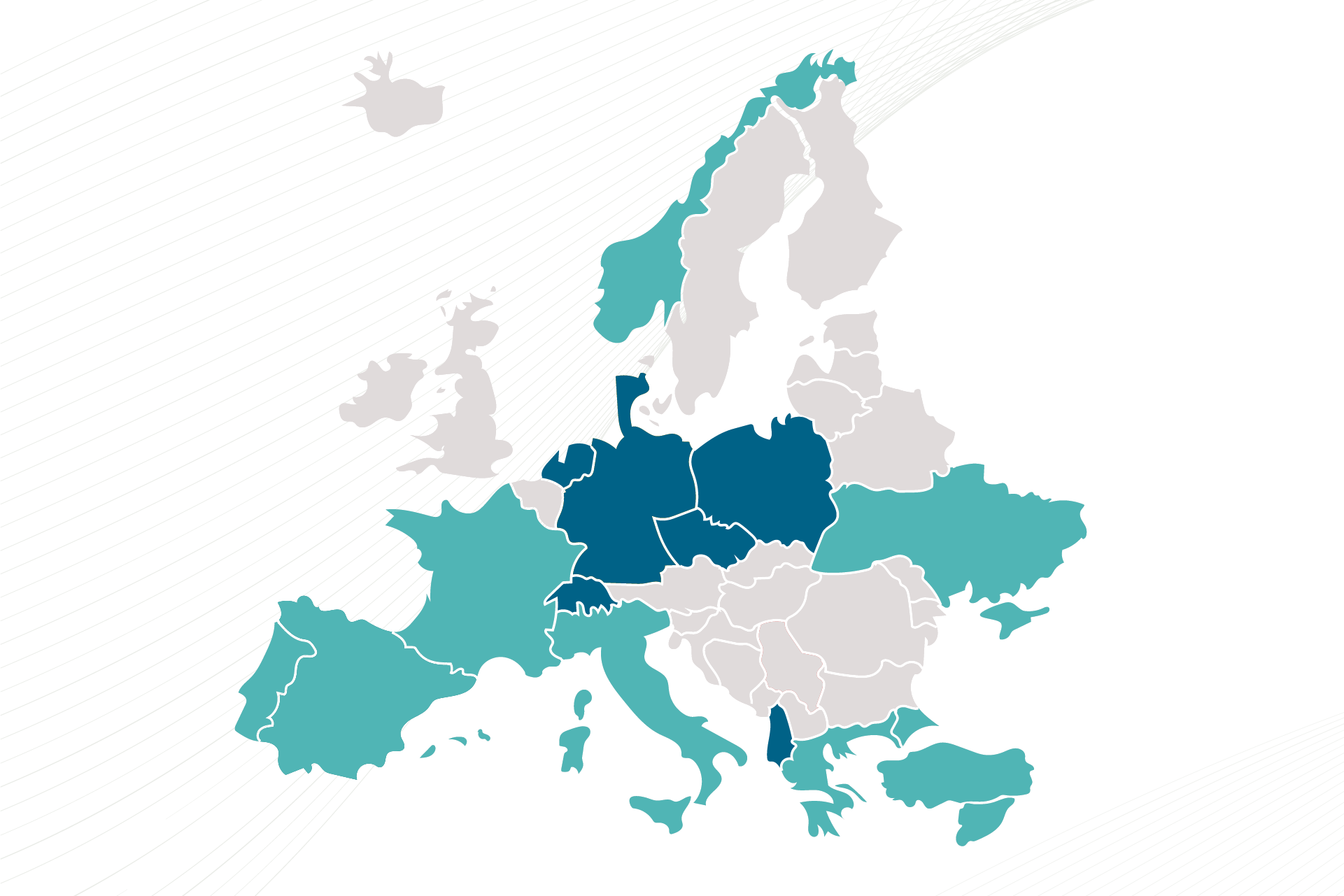
D.G.2 Nordic: explore novel approaches that especially account for significant or extreme weather events (precipitation and temperature) in reducing sediment, nutrients, and pesticide losses under different climatic regimes and agricultural systems in the Nordic region (including the Baltic sea).
D.G.2 Nordic: explore novel approaches that especially account for significant or extreme weather events (precipitation and temperature) in reducing sediment, nutrients, and pesticide losses under different climatic regimes and agricultural systems in the Nordic region (including the Baltic sea).
D.G.7.: improve smart agriculture novel solutions towards irrigation water management and nitrogen leaching mitigation
D.G.6.: co-develop, improve, adapt, and test current and novel agricultural (soil, water, nutrient) management technologies and solutions, evolve monitoring technologies and integrated solutions, and adapt, calibrate, and validate the developed tools, models, and systems
D.G.4.: create a testbed for the innovative solutions and Integrate the network of experimental agricultural watersheds of the Government of Navarra.
D.G.5.1: develop a monitoring system for groundwater and soil status in the Mondego River Basin under different agricultural scenarios and identify, adapt and evaluate sustainable farming practices so that mitigation strategies to reduce pesticide and fertilizer impacts can be effectively designed and applied.
D.G.3: test and generate novel insights for zero pollution in Ukraine under climate change in the post-war recovery.
D.G.1. East-Med: Identify pathways to transform state-of-the-art solutions into traditional practices for sustainable agriculture and water conservation in water-scarce coastal Mediterranean basins facing multiple challenges.
DG1 East-Med : Identify pathways to transform state-of-the-art solutions into traditional practices for sustainable agriculture and water conservation in water-scarce coastal Mediterranean basins facing multiple challenges.