Navarra Watersheds (UPNA, UOB)
Demonstration Site – Spain (Navarra Watersheds and Lleida Area)
Innovative strategies to improve water and soil management in vulnerable agricultural contexts
The Spanish demonstration site focuses on the Navarra watersheds and the Lleida area, aiming to assess the impact of agricultural practices on erosion, water quality, and sustainable use of water resources under increasing climatic pressure.
Ongoing activities:
- Installation of new monitoring stations in areas transitioning to irrigation
- Water quality monitoring, with special attention to herbicides, pesticides, nutrients, and sediments
- Comparison between agricultural watersheds and natural areas to evaluate the impact of cultivation.
Development of real-time irrigation control systems, including remote sensing techniques - Assessment of the role of natural vegetation in reducing nutrient and sediment export.
Focus: Peach cultivation in Lleida
- Study of climate change impacts on one of Spain’s most productive yet water-demanding fruit-growing areas
- Analysis of thermal phenology, cultivar variability, and future climate models with potential effects on productivity and plant diseases
- Use of machine learning and sensors for phenological monitoring
- Investigation of climate effects on pests such as the oriental fruit moth (Cydia molesta).
Tools used:
- Hydrological models (e.g., HEC-HMS – Hydrologic Engineering Center)
- Remote sensing for detecting anomalies in irrigation systems
- Time series analysis to understand long-term trends in water quality
Main objectives:
- Identify best agricultural practices to minimize erosion and pollution
- Understand climate-soil-crop interactions to adapt agricultural production to new climatic conditions
- Develop advanced and replicable technological solutions to enhance the sustainability of agriculture in the Ebro basin
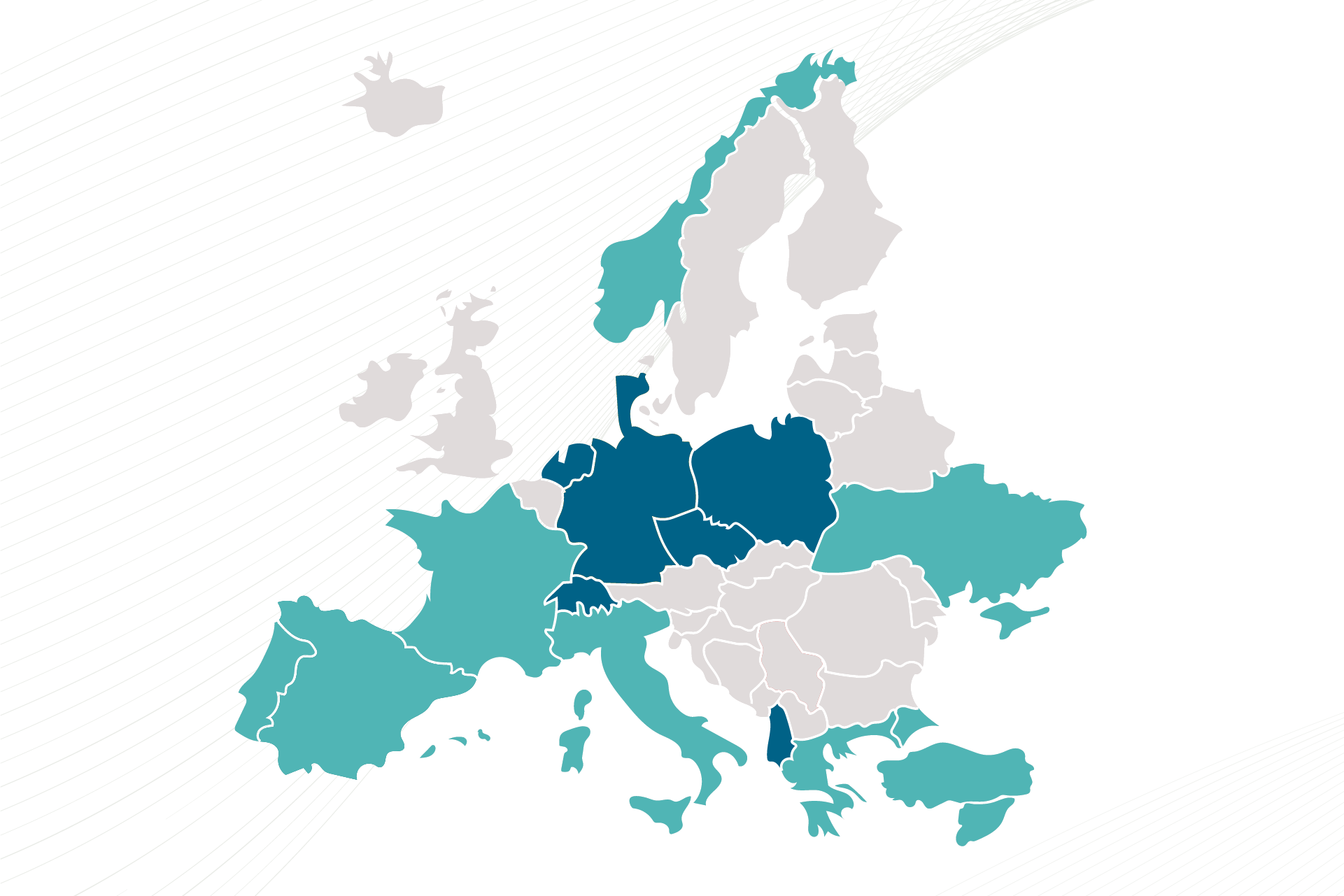
D.G.2 Nordic: explore novel approaches that especially account for significant or extreme weather events (precipitation and temperature) in reducing sediment, nutrients, and pesticide losses under different climatic regimes and agricultural systems in the Nordic region (including the Baltic sea).
D.G.2 Nordic: explore novel approaches that especially account for significant or extreme weather events (precipitation and temperature) in reducing sediment, nutrients, and pesticide losses under different climatic regimes and agricultural systems in the Nordic region (including the Baltic sea).
D.G.7.: improve smart agriculture novel solutions towards irrigation water management and nitrogen leaching mitigation
D.G.6.: co-develop, improve, adapt, and test current and novel agricultural (soil, water, nutrient) management technologies and solutions, evolve monitoring technologies and integrated solutions, and adapt, calibrate, and validate the developed tools, models, and systems
D.G.4.: create a testbed for the innovative solutions and Integrate the network of experimental agricultural watersheds of the Government of Navarra.
D.G.5.1: develop a monitoring system for groundwater and soil status in the Mondego River Basin under different agricultural scenarios and identify, adapt and evaluate sustainable farming practices so that mitigation strategies to reduce pesticide and fertilizer impacts can be effectively designed and applied.
D.G.3: test and generate novel insights for zero pollution in Ukraine under climate change in the post-war recovery.
D.G.1. East-Med: Identify pathways to transform state-of-the-art solutions into traditional practices for sustainable agriculture and water conservation in water-scarce coastal Mediterranean basins facing multiple challenges.
DG1 East-Med : Identify pathways to transform state-of-the-art solutions into traditional practices for sustainable agriculture and water conservation in water-scarce coastal Mediterranean basins facing multiple challenges.