Basilicata (GAL, EXEO, EXT)
Demonstration Site – Italy (Basilicata Region)
Innovation in water management and environmental monitoring in vulnerable agricultural contexts
The demonstration site in Basilicata addresses several environmental and management challenges related to data scarcity, groundwater vulnerability, and the need to actively involve farmers in the transition to sustainable practices.
Key challenges:
- Ineffective or insufficient monitoring networks for surface and groundwater.
- Lack of data on the soil unsaturated zone.
- Groundwater bodies particularly sensitive to pollution.
- Scarcity of integrated data and knowledge.
- Limited farmer participation in decision-making and practice development.
- Lack of evaluation and adaptation of agronomic practices to actual environmental needs.
Implemented approaches:
- Evaluation of best management practices and mitigation measures at farm and watershed levels.
- Design and integration of environmental monitoring systems.
- Use of IoT sensors and cloud solutions for real-time monitoring.
- Tracking and identification of pollution sources in water bodies.
- Monitoring of irrigation water withdrawals.
- Experimentation and standardization of Nature-Based Solutions.
- Integration and application of physical modeling tools and data.
- Use of DNA-based indicators for biological and environmental monitoring (in synergy with WP2, WP3, and WP4).
Objectives:
- Build a modern, efficient, and integrated monitoring system.
- Actively engage farmers in a bottom-up participatory approach.
- Foster the ecological transition through data-based, technologically supported, and adapted agricultural practices.
- Improve understanding and management of water resources in a vulnerable agricultural context.
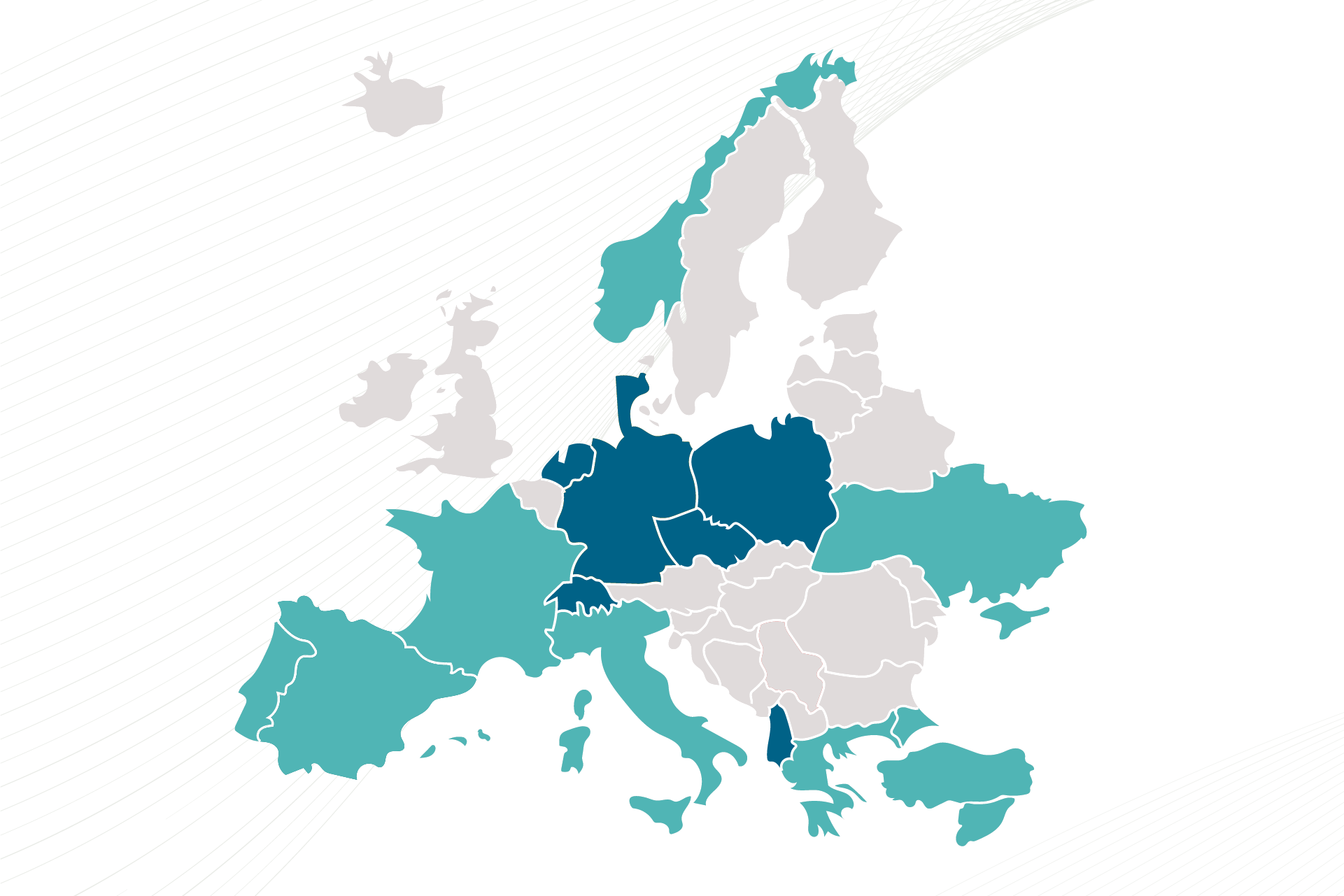
D.G.2 Nordic: explore novel approaches that especially account for significant or extreme weather events (precipitation and temperature) in reducing sediment, nutrients, and pesticide losses under different climatic regimes and agricultural systems in the Nordic region (including the Baltic sea).
D.G.2 Nordic: explore novel approaches that especially account for significant or extreme weather events (precipitation and temperature) in reducing sediment, nutrients, and pesticide losses under different climatic regimes and agricultural systems in the Nordic region (including the Baltic sea).
D.G.7.: improve smart agriculture novel solutions towards irrigation water management and nitrogen leaching mitigation
D.G.6.: co-develop, improve, adapt, and test current and novel agricultural (soil, water, nutrient) management technologies and solutions, evolve monitoring technologies and integrated solutions, and adapt, calibrate, and validate the developed tools, models, and systems
D.G.4.: create a testbed for the innovative solutions and Integrate the network of experimental agricultural watersheds of the Government of Navarra.
D.G.5.1: develop a monitoring system for groundwater and soil status in the Mondego River Basin under different agricultural scenarios and identify, adapt and evaluate sustainable farming practices so that mitigation strategies to reduce pesticide and fertilizer impacts can be effectively designed and applied.
D.G.3: test and generate novel insights for zero pollution in Ukraine under climate change in the post-war recovery.
D.G.1. East-Med: Identify pathways to transform state-of-the-art solutions into traditional practices for sustainable agriculture and water conservation in water-scarce coastal Mediterranean basins facing multiple challenges.
DG1 East-Med : Identify pathways to transform state-of-the-art solutions into traditional practices for sustainable agriculture and water conservation in water-scarce coastal Mediterranean basins facing multiple challenges.